Tuesday, June 18, 2013

One June I was invited down to the Dominican Republic to be a keynote speaker at their convention of EFL/ESL teachers. One could say that this was a high point of my career, in that I was recognized as a leader in the field of integrating technology in the EFL/ESL classroom; at the same time, it was a low point in my career, if you consider the quality of several variables, including my knowing what I was talking about, my fitting my message to the audience that was receiving it; my actually having a command over the technology I was showing and using; my being comfortable in an environment with a large population of very critical, very smart teachers. In all of these respects I was somewhat failing; I could not expect them to invite me back. On the other hand, I try to remember that they spent a good bit of money getting me down there, and putting me up for a week (in both Santiago and Santo Domingo), and I hope that what I did for them was at least partly useful.

We started in Santiago, which was high in the mountains in the center of the country, and had an English center which hosted us; some very nice people worked here and befriended us quickly. On tours around Santiago we were fed well and I noticed that there were a lot of baseball fans there; American baseball was often on television (in restaurants) and people knew the teams and players, and wanted to talk about it. My co-presenter, S.G., came from California and planned a presentation on cell phones, but was unable to turn hers on without incurring hundreds of dollars in roaming fees, and the one she requested from the presenters (a cheap local version) didn't arrive in time, or had some complications in the process of paying for it. On my end, things I planned on presenting with didn't work, because of mac/pc differences, or just online capability; I don't remember; it may have been that it required Flash. We were both in a kind of jam.

It was very hot and steamy, but there was a limitless supply of fresh mangoes, papayas, and other exotic fruit. I always felt sweaty and unable to function well; I also had problems at home when I called Illinois at night, and these problems worried me during the day. I would dress up and speak as well as I could about the value of using technology: blogs, speaking programs, different things that I'd done. In general people were technologically astute, but their institutions provided far less support than ours; teachers shared one computer, generally, and did not expect their students to see something that was put online. You have to work with what you have, I'd tell them. Show us how, they'd say, or, hah! There was a communication gap.

Sometimes the communication gap got worse just as we spoke to people who should have been most able to communicate with us, namely, the people who ran the center. They were, in effect, our sponsors, and they were extremely nice to us, yet we often didn't understand each other, or had differences in the way we heard things. It's interesting to see the wide variety of conditions that people teach English under, worldwide, and one of the things I had to adjust to was merely being in the middle of a situation in which learning English is political in nature, it's a stand in favor of leaning toward the power elite or the ruling classes. People never say that, but you get echoes of it as they describe Dominican history or the history of the relations of the US with the various islands in the area. I encouraged them to use English to document the beauty of the island, the traditional stories of the people, the background of baseball players, etc., online. I tried to find ways in which they could use online opportunities to speak more English with the people they would find online. In my keynote speech itself my own technology wasn't working well, and I ended up showing a youtube our class had made using my own banjo song as background. People looked at me with their jaws open, I think. It's possible they had never heard the banjo. We were way out in the country.

In Santo Domingo we met the leaders of the ESL/EFL organization and had much finer quarters, more mangoes, endless papayas, fresh coffee. We were given tours of the old part of the city and saw statues of conquistadores, some of whom they said were evil. They had a fondness for Columbus, though, because he'd landed on their island first. They had mixed feelings about the conquistadores in general and I don't think I heard everything; nor did I feel entitled to ask, really. The sea crashed against breakwaters in our area of town; there was a kind of promenade. But it was sweltering, again, and one could best walk there at night or in the mornings. At one point they took me out someplace where there was live music and got me to try to dance. I really liked this; it was a classic Dominican place, with lots of good food, where everyone was having a good time, and it didn't really matter that I was a bad dancer. They were a fun-loving people, and you could tell, there were lots of hard times, no money, companies coming in and taking their resources and/or their cheap labor, struggles to make a living in any way. Haiti, next door, was worse, and lots of Haitian immigrants ended up coming over, learning Spanish as well as Haitian and in some cases English too, and living with a certain kind of discrimination, I'm sure. It was too much to learn in a week. Exhausted and way too hot, I left, but was glad I'd done it, and met the people I had. I tried to keep a record of what I'd done online, and, though it occasionally gets mangled by computer changes, it's still there.

Friday, June 14, 2013

went out for my walk tonight, and there was still daylight, but wild loose clouds were sailing over above us and it was pretty sure there'd be rain later. rain is rare here, but glorious; people like it; the farmers say it would have to rain for a month to make up for how far behind we are. the park, however, is very green, reflecting their constant watering and the fact that it's a kind of bowl, and whatever rain we do get, ends up right in the middle of it. i walk around the park quickly. it's kind of steamy out, but lots of people are out, especially dog-lovers and a few people like me, exercisers.

the life of a teacher generally has one break, around christmas, which in my case has always been frantic and barely a break on account of making stuff, getting a tree, etc.; about the time i've rested a little, first week of january or so, it's school again and we started over. with a little engineering you can get a summer term off, or maybe both, in my case, i've got this first one off, a rare break for me after thirty years solid of teaching. my wife says, please take the month, just drive the kids around, so i can work & get a handle on the overwhelming load; spend some time, take care of the house, that kind of stuff. but in my mind i'm like, write...it's my first chance, in a long time. i have three unfinished books. i have a book of stories; it's unfinished too, since it's now at about fourteen, and really needs about twenty before i publish. i've got e pluribus haiku 2013, 720 poems, i want to put it out on the fourth again. so my head is spinning and i'm dying to write. but i often draw blanks.

lubbock is made of these wide streets with very few low trees that don't block the sun at all. i remember my parents pointing out the historic sights of las cruces and i'd say, that's nice, and very old, but how can you even see it in the sun's glare, with these wide-open avenues and huge blue sky, it's all i can do to not count the little pieces of gravel in the road. it's the same here. slowly i begin to see the really old buildings, interesting sites, even places where there's wild weeds or wildflowers even in the city, along sun-bleached alleys with of course no shade. none whatsoever. you stick to the main roads, you come to a tree eventually, it might be low-slung, or too old, but there's a little shade out there. people say, the trees were all put here by people. none of them are part of the natural environment.

so i come home, afternoons, sit under the fan, and get out one of my books, or e pluribus. but sometimes i feel like my mind is bleached out. i want to write a story, but nothing seems impressive enough, everything seems bleached out in the sun, like a mirage, like a puddle left there by the sprinklers that will evaporate instead of go back to the reservoir from whence it came. up north it's flooding, there's too much water in the air, it has nowhere to go, so it's hanging up against the wall of east coast heat, and it's raining a lot, and that rain is washing down and shooting the rivers from the ohio down to the missouri. but out here, we're pulling the last drops out of the aquifer, to water these lawns and this park, where it'll evaporate and we'll lose it forever, and our plains will become a desert, unless we figure out a way to hang onto some of it, or pipe it down here from somewhere. go figure.

under such circumstances, it seems recumbent upon me (if it is possible to say such a thing) to make plans to go somewhere else, such as kerrville, or perhaps minnesota, someplace where a person could settle where there would be a future, for one and one's descendants, one way or the other. i feel, in a sense, that moving someplace that has such trouble in its future, is not smart, in a fundamental kind of way. however, what's done is done, and i'm here, and i'm sticking with america, at least for the time being, as all five of my kids are here, all eight really, and one grandchild, and they all have to make it one way or the other, somewhere, and just about any place is grim by some accounts, yet sometimes i also have hope for the u.s., at least more hope than i would for, say, italy. my favorite places, really, are in the far north, like alaska and minnesota, and maybe montana, the u.s. could lose everything, and they would still be up there with the snow, and the fish, and the clear blue sky and rugged winter, and life wouldn't change much. but texas is the same in some ways. it's rugged. you get used to living without stuff, like rain. the story i read about natalie maines called it racially divided...heck the whole u.s.a. is racially divided. there was an uproar at some spurs game, but hey, there are always uproars. let's face it, it's like europe only more so. times are ripe for skinheads. the only question is, how will it turn out. we'll either get jobs, and people will live their lives, and we'll avoid some of these huge pointless wars, or...or, i guess maybe that's hopeful. let's stay hopeful.

the road to kerrville is long and flat and reminds me of illinois in that someone is pouring junk on the land and making some money off of it, but in some cases they're just letting it sit there and still making money off of it. you go through tiny towns like this one called "eden" and then you go through this crossroads, interstate kind of place where all the roads converge and that's abilene, no way around it, practically, except going through the oilfields. but way down there, by san antone, is kerrville, and it seems to be hilly, beautiful, no shortage of water, but with the same blazing sun, and everyone's playing music all the time. and they always say "welcome home" to you, like the rainbows do, make you feel like, where have i been all this time.

been in the world, in the work world, in the single-family make-a-living world that used to work a lot better than it's working these days. our industrial society was based on the idea that someone was in the factories, producing stuff, the universities were teaching stuff, the government was just sitting there trying to control stuff, or maybe catching some tax cheaters. in my mind there wasn't really a question of whether our government was worse, or more devious, than say, that of china, which not only spied on everyone but just killed the ones who spoke out against it. but then, as they say, 1984 was meant to scare us, not be a playbook or a set of directions, but nobody could foresee, we slipped into an era where there's literally no privacy anyway. i set out this blog, i figured, might as well spill all the beans, just tell my whole story, every bit of it, no sense hiding anything, they could get me if they really wanted to anyway. i guess what i'm saying is, it seems rather odious to be one of the big boys, pour poison on the land, join the government, or do their dirty work, killing people and running security. it's also hard work, staying out of the big picture, living way up north or way out in the boonies, catching fish and living without insurance. i'm not sure how people do it. for me, i feel a little edgy about it, i have a lot to say, the inclination to put it in novels, or stories at the very least, but i have this situation, i come home from running around at noon, it's 97 already, the sun is beating down, i make another cup of coffee, this one cold maybe, i sit down by the computer, under the fan, and i end up doing facebook. my tongue is tied. i got nothing to say. almost nothing shocks me, or surprises me, or even seems worth pointing out.

it's partly that, from noon on, anyone with any brains is taking a big nap. you run around, about four or five, it's not only hot, though it's dry and not too bad, but it's also bright. no trees. huge sky. aircon on full blast in your car, and the car still heating up. tonight though, after my watch, i saw the fox again. but this time, there were two of them. they were prancing around this one house, it's kind of a mansion, low-slung, lots of green grass, nice bushes, beautiful windows, they were kind of dancing, on the brick wall under these trees, in the dark. big tail, big eyes, and there were two of them. well, i figure, if there are two, soon there will be more, and all the neighborhood strays will be in danger. squirrels, housecats, you name it, these foxes are out looking for it. who knows what they eat? most likely the little stuff, like the squirrels, but i don't know. they were watching me pretty closely, because they were penned in, kind of, up against that house, with its wall running around its front windows, and its green grass and its fragrant smell. they eyed me carefully then ducked back into the shadows a ways so it would be a little harder for me to come after them. but i didn't anyway. what do i want with a couple of foxes? only to admire them, and get myself on slightly more of an evening schedule, like theirs. nights, it cools off a bit, and it's actually pretty nice.

Wednesday, June 12, 2013

boxcars on walnut

bxcrs

now available at tlevs press

Saturday, June 08, 2013

the older son has a healthy disrespect for religion, he rejects it in all its forms, whether that be someone at school trying to get him to pray, or me trying to drag him to a sunday school that's full of nice kids but makes him do sports and various things he's sick of anyway. he moved here just at a time when, if mandatory praying is part of what texas is about, part of your graduation, part of all sports events, etc., then it comes to represent that part of texas that he really would rather trade for illinois. so it goes.

the younger guy goes to church willingly on sunday, because he feels that a crowd of kids like himself, determined to cause trouble and have fun in a non-school setting, where benevolent adults will look the other way when you steal a cookie, why that's his idea of fun, and there's lots of room to run and nobody really cares how you dress or even if you take your shoes off. he'll gladly sing a song or listen to whatever the pastor has to say to the kids, because most of the time it's pure wildness and nobody really tries to control him very much. i do, but i also leave him with other adults when i can so as to participate in any other religion i can get for myself, though that sometimes just turns out to be a quiet moment by their labyrinth there at the church. the church is in a nice middle-class lubbock neighborhood, blocks from a busy part of town. but on sunday mornings, it's really nice.

online i seek out the bad quakers - quakers with attitude, the association of bad friends. since all quakers are basically dropouts from the mainstream spectrum - what defines them really is desire to have religion and have god, but not have dogma, or structure, or a boss - most quakers are "bad" anyway in the eyes of the world, and then for them to be bad in the eyes of each other, that's really a challenge, and some succeed occasionally. i mostly watch but participate occasionally. to me it's nice to have a crowd & my crowd here is mostly the presbyterians - at the church - but my crowd online kind of makes up for it. this actually is another kind of escapism. it's keeping me from finishing the stuff i've started writing.

more rain tonight, maybe hail. we're boarded up though, it probably won't hurt us like the last one did. i feel like i'm in the hold of a ship. we have only one window in front now, but we leave that one uncovered, and i like that, because the sun here is like kansas, sharp, piercing, all-encompassing, way too hot, and there's no way i can really get used to it. my wife is halfway used to it already, she's from california, apparently blue sky and lots of sun is just the way. and you look out into the ocean, lots of sky there too. but i'm still not used to it. i was walking tonight and looked up, hoping to get a clue on when it would rain, and maybe ho hard. wild clouds were sailing over and the pattern was unreadable. a mass of clouds off to one direction but unclear as to whether this mass and what i saw skittering above me were even remotely related. finally, a couple of random drops here and there, as i walked. and a smell of dog wallow coming up gently from the park, where that water has sat, maybe a couple of inches deep at most, for several days, mixed in with dog poop, got up quite a smell, and begins wafting, as soon as you get upwind. a strong wind doesn't mean everything blows away...it just means it blows. and it might just as soon blow right under one's nose, as one walks. chou
woke up to pounding on the roof and glass shattering upstairs, and then downstairs, where we have lots of old many-paned windows. big pieces of hail were pounding us and breaking the glass. i was in a daze, because i had been dreaming something wild, even though it was early, maybe ten p.m. we looked outside to see what was going on but quickly decided not to step out there; the pelting was strong and getting stronger. my wife actually saw the wind shift from hard west to hard east.

after it died a little, we counted the panes, maybe 15 of them, on 12 windows. we patched them with cardboard and strapping tape; in the morning we had someone come out and board them up. our house is now darker and cooler, with much less sun coming in. seems like the season to stay inside days, anyway, until the evening: do your work in the morning, lay low all afternoon under a cool fan, come out at night. the trouble is, i have 59 years of programming that works against this pattern, and still wants to do stuff in the afternoon, while i'm awake.

went out for a walk last night, already two nights from the storm, and some power company guys were hanging out at the edge of the park, eleven pm maybe, with their radios on, trying to decide what to fix next. nearby was a streetlight that had fallen; the bulb of it, unbroken, was still in the street. piles of brush everywhere. the city pleaded with its citizens: if you are not aged and infirm, please take your brush to the city park, if you can. i took offense, of course i'm not aged, i'm only 59. so i loaded up two vans full of the stuff and took it down there.

the insurance guys said they were too busy, because all their people were up in the amarillo area, maybe they had a big weather event too; maybe it was worse than ours, or at least earlier. we actually had paint damage because the hail was like a sandblaster. we probably had roof damage too. who knows, but i guess we'll find out.

i realize that working on my poetry like a fanatic is a kind of escapism and keeps me from much more serious concerns, like what's happening to all the children, including the grown ones. i don't always know what i can do but i worry a lot and that may be about the only thing, at least for the moment. the younger ones need attention too, but lately i've mostly been doing this ostrich thing. i don't know why. it was something about kerrville, that made me just want to put a cap on it, describe it, put it in one spot. 50 states, d.c., a kind of web version in constant need of repair, and about a quarter of them in need of serious revision. but it's up to about 730 now, a fair number, a collection. the 2013 version, due on the fourth. summer is settling in here. the sun is coming out for serious now.

i realize whole towns in oklahoma have been laid to waste. the government is reading everyone's e-mail and facebook, not to mention blogs, and bombing people randomly in pakistan, yemen and afghanistan. weather systems have gone haywire partly because people are keeping their trucks running, just to stay out of the heat. and people in towns like this are pulling water up from the aquifer, just to get a green feeling, the soft feeling of grass and normalcy, that you can't get in a totally arid environment.

and i stay home, writing, waiting 'til night to go out, and even then, just walking around this park. one side of me is just afraid, afraid of the future. sometimes i think, everything will work out. other times, i'm just not so sure. i guess we're all like that.

Wednesday, June 05, 2013

i sit on the back porch while the dog pants and drools at my legs; she's already had about half an hour of throw-the-ball, but she's ready for more, and doesn't want to go lie down if there's any possibility that more is forthcoming. it's cooled off a little; yesterday the temperature shot up to 105 while we watched it, practically; it went right up through the nineties in the afternoon and finally we got our air-con to work and all settled in to sleep at night. the boys are in camp these days; one has sports camp and then art camp, so he wants to wake up in the morning and that makes a big difference. in some sense it's like summer when i grew up, where you can go outside sometimes, and you run around and do good stuff. you keep busy. in the true south, the summer is too muggy to do stuff, and once the daytime settles in you have to go inside and drink tea. there's a little bit of that here, but because it's dry, even now i can be on my back porch. i've watered the plants; i'm thinking, if it stays this way, i could sit out here for a while.

came back from kerrville moved basically by my encounters with the rainbow people. they were not too concerned with the news, what had happened in oklahoma, who was winning in baseball, or what to do with the water supply. instead, they traded notes on where they were pulling random searches that included dogs, or where they still fired people for smoking legal substances. opportunity for them was a place to work, to eat and to camp, with plenty of time to play music, and friends around. it was good times, and they got right to telling stories, socializing, sharing whatever they had. when i got home i was inspired to finish my 2013 poetry edition instead of doing some of the other stuff i've had on my plate. that poetry edition is now at about 730, but will probably be pared down as i've found a lot of doubles or repetition as i've gone through it with fine-tooth comb. i also want it to fit into a printable volume that i can continue to give away; as it is, it's 32 pages but the first one is front matter (that could go in the cover) and the last one is blank. so i have a bit more room to expand out into, and i will, but i'm not sure if i'll actually add a page or not. it turns out this poetry really needed a lot of work and if i concentrate on it i almost always find something that could be better, more professional. it's an ongoing project, and i try to make it the best i can each year, but my standards have been going up, and

so it's unspeakable luxury, to sit here in a back courtyard, the garden and flowers watered, my wife frantically overwhelmed and off to work, and the kids pleasantly occupied swimming or running or whatever, and all i have to do is worry about poetry, but there's more out there too, and this dog won't leave me alone, she could use a whole morning of this, apparently, and keeps pushing the wet slimy ball into my arms as i type. my wife wants me to haul concrete for her yard=decoration art project, these bags are quite heavy, and i've had a sore back since before i went to kerrville which comes maybe from being old or maybe from just digging the garden. doesn't matter, slowly i'll ease it back into shape, and get firm with the dog who will leave me alone and take a huge nap like the cats do in the day. when the aircon was down i could hardly imagine that they could even sleep in the day, but they manage to do that, one way or the other, while we go out and run around and do our people stuff. they're sitting there going, you do what you want, i'll sleep, and they do. nighttime, while we sleep, they stand by the window and listen for the birds. or whatever.

can't type; the dog is on me too hard; i'm going to haul concrete or whatever, keep moving, so the dog can rest.

Monday, June 03, 2013

i like to say i "played kerrville," and it was true; i took my fiddle down there, a concert was arranged for me and my long-time partner, who knows the place well, and we played in front of an audience. it was well-received, but actually that's not saying much. folk music is always well-received, but that's just another way of saying, keep your day job. it was a wonderful place, wonderful people, and even the weather cooperated.

kerrville has preserved a kind of rainbow culture that started right around the time they did, in 1972, when i graduated from high school. people say, "welcome home" especially when they find out it's your first one. people are genuinely nice and share everything. musically it's a songwriter's heaven, full of other songwriters, four shows every evening, lots of playing in the campsites, venues where you can play for people. i heard lots of up-and-coming songwriters, some of whom i might mention quickly: betty soo, jim sabarino, dave morrison, mickey marlin white, a guy named wes whose family name i've misplaced. onstage i heard steel wheels, trout fishing in america, max gomez, antje whose family name i've also lost. all were quite excellent. i mention them in the same sentence and let you assume that if they'd made it to the main stage they had at least passed through a lot of hoops to get there; this is true, but sometimes music can be very good that you just hear in some out-of-the-way place, and there was a lot of that too. the whole place had a different clock than i do, so it was difficult to adjust to the fact that the best music was often at 2 am, 3 am, 4 am. 4 in the afternoon, i wanted to play, but the sun was beating down, and people were just waking up.

the first night at a campfire on the hill my partner played a song about her father which she had written; an accordion player then did a kind of parody of the song, on the spot, a classic version, in which some people laughed so hard they cried. my partner, if she was hurt, she didn't show it, that's partly because the song he did was excellent too.

people brought quite the collection of old school buses, campers and motor homes, and squared off little areas that were essentially campsites where people would play and various things would be served. this is where the music was, 12-6 am. food could be bought at virtually any hour, so something was always happening; around 6 am, the littlest kids would start waking up and the cycle would start again. i only saw about a cycle and a half, but much of it was in that in-between time. i was a distinguished visitor. my singing partner had been going there for many years; everyone knew her, and she was glad to prove she wasn't always a solo artist. we played together at many venues. at the arranged one, a huge tree had fallen earlier in the year, leaving a sun-bleached courtyard that made most of our audience back off into the shade; they felt a little removed from us. i'm not sure if we sold any cd's from the experience. it was a pleasure, of course, to play with her; it always is. it was like our group was back together again.

one duo, trout fishing in america, i actually heard three times, because they did two kids' shows, both directly beneath the illinois tent where i hung around a lot. i got the idea to go into kids' music, to be another raffi. it could be done. as it was, i played every opportunity i got (i'm somewhat starved for opportunity here, but that's only because i don't know enough people yet). really, besides playing different campsites with her, my best opportunity came when the accordion player, who just happened to be on my level, was serenading the kitchen workers on the one day when i was there, and i jumped in there with him and we played some really hot cajun music, and got the kitchen staff dancing. now, that kitchen staff was also somewhat inconvenienced, because i was in front of the walk-in cooler, and fiddling takes a lot of room. somehow they let me know when they needed to pass through, even while we played this really hot cajun music. i'll never forget this; it was the high point, really, of my time there. it was partly because, many many years ago, i worked in the hippie kitchens myself, and i worked hard, day after day, and i felt this way when i got there, i felt, first, accept their dinner, which they have so graciously provided (and which i would have paid for if i could have found out how), then, they have music, they need someone to play for the kitchen staff (and they even consider that a "job" that people do), i'll do that, and i'll do that well, and they won't forget it. someone took pictures. someone got tears in her eyes. most people smiled and went on out to work their shift at the main show. the accordion player, i'm going to find that guy, and play more music with him, first chance i get. it might be a few years, though. he's from austin.

there was a low point, in the heat of the afternoon, when i was at a party, lots of alcohol and someone spilled a drink on my shirt, and i couldn't play music, because the country musician kind of insisted on holding the floor. the woman whose birthday it was, was kind of over the top, but had trouble brewing in her life, and the sun just beat down hard, every time we turned around. it occurred to me, and i learned this, that these folk lovers, and rainbow people, had trouble from the minute they left the camp. and, just like always, it took a lot of faith, to travel a long way, get through the checkpoints and the police on every corner, and make it to a camp, where they're safe, and things can be shared, and the music flows at every opportunity.

i'll try to collect some of the best of kerrville, perhaps on my music page. suffice it to say, it was great, and a long drive down into the hill country, really one of the more beautiful parts of texas, was nice also. i'm becoming more comfortable with the state, and the long hours of driving, the open spaces, the huge sky, the people. i saw two memorable bumper stickers, one said, my governor is a jewish cowboy, and the other said, don't mess with reckless. lots of austin people, lots of texas music, texas food, the hot texas sun. and the cool nights, that went on forever.

Thursday, May 30, 2013

I don't know how I got interested in haiku; it might have been the idea that you could compress large wisdom, big pictures, many possibilities, into tiny sentences; getting the right words was then kind of like getting a ball right over the plate. You could play with the words until you got the sound right; that was kind of like any musical instrument. When you were done, it was never more than seventeen syllables.

It turns out, in the haiku world, translating seventeen Japanese sounds into seventeen English syllables is considered silly; in fact, people who stick to the 5-7-5 structure are shunned, or considered ignorant at the very least. Most haiku experts don't even want to argue about it. But I continue to be attracted to the 5-7-5 structure for several reasons. One is that, though it was clearly derived from a Japanese rule, or style, it is, in English, clearly American; it's even pop American, since haiku experts shun it. Second, one can unite a body of work with a single structure; although I could just as easily use 4-6-3, I don't, because I've never had a chance to do more than a few with any other besides 5-7-5. In short, I started with 5-7-5 and now that I have over 700 in 5-7=5, I'd like to think of the body of work as united by one syllable structure.

I was first moved by a collection called "airless suburban haiku," all 5-7-5, all I believe freely available on the web. I was impressed by its ability to capture so much in such a brief format; I wanted, then, to capture much of what I'd seen and felt, and wanted to see if I could put it into a similar format. I wrote TOEFL haiku, airport haiku, coder's haiku, and various other kinds. But mostly I used it to record the moments of my travel experience that stuck with me. Because I'm very geographical, and always have been, I incorporated that into my haiku. I figured that American haiku has to tell you where it is placed, since the US is so diverse, so I just decided to let every one tell where, thus crowding an already crowded little set of words. But what is the US if not a collection of very interesting place names? In the end, I figured I could have fun with it.

I am not the most careful proofreader, apparently. As of this writing my most recent volume has over 600, but isn't perfect by any means. There are equal signs where there should be a dash. There is one entire header missing in the self-published version. And on and on.

Yet I find that people respond to it; lots of people are geographical, and it really brings out the color of a country that is so wide, so various, so diverse. Whereas this prose account tells the truth of my travels and my opinions, the haiku is allowed to bring moments into focus without being so concerned with the truth. Yet most of them are based on some kind of truth, at least, real things that happened out there. In some cases you can match them up against the real story and find the truth of it here. One major difference is that the haiku sticks to the USA, whereas in reality some of my most interesting experiences happened in Canada, Mexico or Guatemala. And in fact I never made it to North Dakota or Hawaii; I had to do research on those, in order to write even a single verse.

I found myself dreaming them up in spare minutes of the day; I've always gotten bored easily, so, for example, if I was at the park, watching small children, I'd daydream into some kind of haiku that took me back to those days on the road. I was slightly worse at childcare, maybe, but you want to know how I got over 700, that's how. Days are long. There are lots of free minutes. I don't watch television. The wide continent, and the people that inhabit it, are the most interesting part.

In a sense, it's a tribute to the US. This is why I publish it on the Fourth every year. I mean it genuinely, not to picture the country as vagabond, alcoholic, drug-soaked, but rather, to get a clear picture, good and bad, incredible in its nature and its people, twisted for sure (in some cases), but beautiful, mine and my family at once. Now as I feel like I'm wrapping it up, that kind of accuracy is important, even though it's not true to fact. I've had trouble keeping it set in the seventies, when I was out there, as so much has come to me since then. I've refrained from telling everything that happened; after all, I tended to find the most unhinged of people; I associated with the unemployed. But I took a wide sweep; I saw as much of the country as I could; I got to various corners. What people had to show me, they showed me, and I saw it. I tried to get these pictures into the account.

Having that out there, in whatever shape it's in, is important to me. It may get better, cleaner, more complete, than it is now, but it's pretty unique as is, so I'm sticking with it as the one published thing I can really be proud of (the novels have never been finished). I have always had trouble seeing myself primarily as a poet; I don't. But, of what I have done, the poetry book is the one that people look twice at. That's partly because each seventeen syllables is worth an entire novel. Yet it's just a single moment, carefully expressed.
got diverted, somehow, to my haiku, which is now at 720 and awaiting a 2013 edition, which would be better, i hope, and more complete. in fact i had a final printing, 20 copies of the 2012, brought it home, and now going through it (too late) with a fine-tooth comb. it's missing a heading for the state of maine - a disaster. who knows what else is amiss. i vow to make the next one cleaner. it is supposed to be all 5-7-5, but it's not: i'm trying to make that cleaner too. lots of it needs to be cleaner. i'm a little critical, now that i actually read it.

a little guy fell and hurt himself, on the school trip, at the end of the year. doctor's appointments, etc., just as i was leaving for kerrville. more later; i'll keep you filled in. i'm a little nervous about kerrville, but it will be good for me. the music is bottling up inside...scheduled to leave tomorrow, FR, and get to kerrville maybe about midnight. scheduled to play on saturday at noon; this will be at a place called the kerr-reckard store. i don't know much about the place - i'll have to scout out the grounds a little.

so i'm taking all these poetry books, and as i sit here trying to make a better version, a 2013, i kind of want to just give away all the 2012s. it even irritates me to read the darn thing, though it isn't bad, if you step back a little. i have several problems though. one is that 40 years of memories come between the actual trip and now; i don't mind including stuff i've learned in the time between, but to some degree i'd like to keep it true to the seventies themselves, and when i actually traveled. so i have to weed out a few of the intervening ones, ones that were written about the intervening time. it's almost like, each one has a time frame, as well as a season and a place.

then, in the big picture, i'm really not too slick about the kigo words, which are season clues. you'd think i'd have better ones besides "summer," "winter" etc. it's almost that, looking back over years of making haiku (i seem to write about a hundred a year), i stumble over some dry eras, times when they really weren't that good. i might weed some out, and then, i might weed some every year. it seems one way would be to make them evolve, make them get better.

the process starts with making sure they are all a true 5-7-5, that kigo are true, that our cultural measurement (spring mar. 21-june 21, etc.) doesn't throw me off; that they are relatively balanced, even if my experience in that state wasn't...2013 will be cleaner, i tell you, i'll make sure of that, if i do nothing else.

Monday, May 27, 2013

new story:

N Train

enjoy! comments welcome as usual!

Sunday, May 26, 2013

I'm not sure when I got interested in design; I think I was always interested in design. My father was a photographer, and I got from him the general tendency to see things in frames, to look at color combinations, to imagine what things looked like in photographs. But I made my own posters, too. And I enjoyed it, even though I wasn't all that talented. After a while, I did it because I liked making a good poster, working on the lettering and the design, etc.

I was photography editor of the high school yearbook, but I was so miserable in high school that there was almost no way I could succeed at that. I found myself hiding in the darkroom, rather than cranking out good photographs, and I had trouble at football games aiming the camera at football players who were heading my way. I carried a fairly nice camera around with me through 48 states, Guatemala, Mexico, Canada and Alaska, but I rarely ever used it and it gathered some sand at the bottom of my pack; still, I got one roll of slides from Guatemala and another from New Orleans; eventually I gave up as I felt a bit like I was competing with my father and couldn't win.

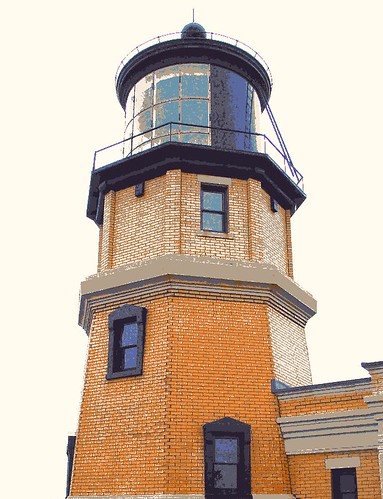
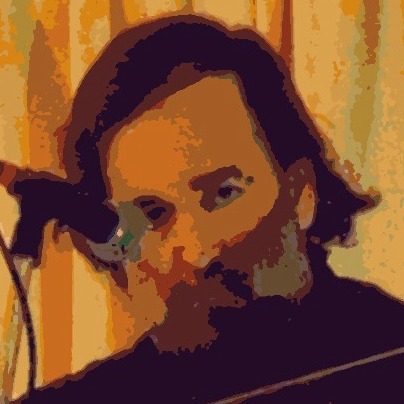
Xerox art, however, was a kind of liberation. Enlarging, shrinking, cutting and pasting, and making collage postcards, this I liked. Another thing that set me free was the digital camera, and the cell phone, which made photography guilt-free (not wasting a ton of chemicals for possibly bad results or at the very least indulgent results) - then, when I noticed that you could posterize easily online, I was off and running again, doing pop art. Today I'm more interested in my own pop art, posterization; some were very good photographs, but the true photographers would turn up their noses at the saturated, exaggerated color which actually makes a good photo less clear. I like it. I'm actually an admirer of Andy Warhol, and I went in this direction probably for the specific reason that there was no sense competing in pure photography. For one thing, I don't think I should be trusted with a high-quality camera. For another, pop reduces things to impressions, images, pure shapes, and I like that. I would rather see the colors up against each other, than the more precise detail.

I made a string of calendars, mostly for my family; I've done it now for maybe twenty years. Some of these were pop; others were xerox art or some other kind of creative construction. For many of these years it was my main creative visual-arts output, since I stopped making postcards, and didn't have pop galleries online or anywhere else. Once a year, I'd try to come up with a dozen good images and put them on a vertical calendar that would hang on my relatives' walls. Some of these are probably still around, but they rarely have my name on them, in fact never; also, they don't have the year; and, usually, they don't even have the S/M/T/W/TH/F/S day markings. I think someone who encountered one of these (for example, in one of my brothers' attics) might wonder who the heck made one of these, where did they come from? I never gave many clues. Some years I got some dates wrong, too. I always had to decide which holidays were more important. Some years I had trouble getting them to people by Christmas.

Then I had this problem: CESL or SIUC would delete their entire web, or places where I had my pop. Free web storage places would go bust and I'd lose everything. Nothing was safe online, except really the weblogs, which have lasted the test of time, though weblogs store photos rather poorly and you lose a lot of photographic quality. Another reason to stick with pop: in a world of constantly changing free web-sites, you can't rely on anyone to store your photos, and I never really did well keeping them on discs either. I'm proud of this stuff, now, as I look back on it, but I've also lost a lot of it; I've been unable to move it out of computers before they crashed, or put them on some site that crashed, or even trusted SIUC to keep a site that it didn't, or wouldn't, keep. SIUC was worried about people stealing its pictures, or misusing them, or someone suing them. I guess, in an era of google images, that's always an issue. To me it was something I always wanted to share.

I had a strong streak of wanting to share everything. This was leftover from my travel days. So many people were so nice to me for so long, that I always wanted to just give away cool stuff, part of almost every day. One thing I chose to give away was pop. Blogs and blogging allowed me to give away writing and poetry, but it also allowed me to give away pop. I'm not sure if people actually like my pop; I don't check with them much; I do it for myself, really, and I've never had the intention to sell any of it. Andy Warhol somehow made himself the bellwether of the art world; his Marilyn pop art was the most recognized, thus most famous, work of art in the twentieth century. He did this partly by a strategy of blanketing the world with his stuff. I was never quite up to that, but I was always ok with letting people just have it or use it. I never saw it as a path to fame. I envisioned t-shirts, sure, or maybe an exhibit or two. The eighteen years I was in Faner, I got quite a collection of Faner pop art; this focused on the drab angles of Faner in the background, bright or blooming trees in front of them. One thing I liked was the contrast between man-made angles and nature's soft curves; this set off Faner and made it all the more remarkable. I always thought I should have a Faner exhibit, or an exhibit of some of the things I'd documented over the years. But, unlike Warhol, I rarely bothered to push the art in any way. It was perhaps because I didn't value it so much myself, that others around me also didn't value it much. Maybe giving it away free all the time was not such a great idea after all; it was, in the end, impulsive. But it was a way of keeping that traveler inside me, alive, every minute. I hadn't taken many pictures on my journey, but now, going on the same paths every day, to the pool or to the student center for coffee, I'd take my phone, and shoot stuff if I saw it, and bring it home and use the photo programs. Picnik was one that I liked, until it went bust. Instagram was good when it came along, but lately I've had trouble with it. There are all kinds of ways to make pop online. Pop may in fact be more useful with online advertising, but I'm just starting with that, and I don't totally believe in it; I'm not sure people really click on those things, or if I want to get involved in luring them into it. My life has always had this tension between wanting things to be good, masterful artwork, for example, or a well-written novel, but then, being somewhat leery of fame, and not trusting myself with it, also undervaluing it, or somehow preventing myself from ever making it what it could be. But that's not the entire reason I continue with basically four media (I play music, I make pop art, I write stories, and I write poetry; other things, like movies or the novel, are either incomplete or too poorly developed to mention); I push all the ways that I'm inclined, and I push myself to be better, yet at the same time I try to be unattached, and do it mostly for myself.

A lot of the pop art came as essentially a break from grading writing papers. Sometimes two, three, four hours a day would be slogging through bad grammar and trying to make sense of what someone was saying. But I'd be sitting there by a mac, and it would have a good camera on it, and lo and behold they even built in the capability of making an Andy-Warhol style, four-square pop icon; I could do it with my own image, first, but then I'd do it with an Iowa map, or Chomsky's diagrammed sentences, or a picture of Kennedy. Though most people never thought about what Warhol was saying with his famous Marilyn Monroe pop art, I knew what he was saying, and felt I could be saying similar things. But it still amazes me; people don't think much about art; they don't want to. Most of the time, it's just a picture on the wall. It might draw your attention, or it might not. Or it might draw it, but only for a few seconds, which would be an abomination, if you really took it seriously. I don't want to take it that seriously. Rather, I'll learn from the greats, and keep it simple, go for the bold, and not worry whether they get the message or not.
i've had a bit of a break, since i finished my grading about a week ago, and it will be almost six weeks before i start teaching full-time again. i have a lot of plans for the six weeks: linguistics book, novel, stories, publish a new e pluribus. first i published two sets of stories on amazon. one is pile of leaves: stories of a rake; the other is the walmart stories. any day now, you'll be able to search my name on amazon, and find them. the books are cheap. i designed the covers myself, and went through the process, got isbn numbers and all. this is not writing though; it's repackaging old stuff.

i am finishing my autobiography, though, and that's real writing. look down the blog at anything in italics, that has real capital letters in it. that stuff is going in the autobiography; it goes with the whole just passing through that you see on the template on the side. this will be just a straight forward story, all true, and it answers the question, why are people so fascinated with the vagabond lifestyle, whereby you give up the idea of a regular place to stay altogether, thus releasing yourself from any responsibility to the world? i did it for two years, but i write the book, partly so people don't glorify it. and i repeat, to anyone who will listen, you can't do like that anymore. mr. k.w. is proof of that, languishing in jail for years, because he was taken advantage of by someone who'd taken him in, and then, let the old guy have it.

tonight on my walk a big glorious cloud came over and made noises and lights as if we would have some rain. maybe later, we'll have rain. i finally wrote a little on the lubbock site because i'm beginning to think, somebody ought to tell these folks, water is a crisis. down san antone way, they're having too much of it, five - ten feet at a time; up here, we're lucky if those big dramatic clouds deign to spit even just a little.

i don't want to tell lubbock what to do with their water; i still feel like a visitor. i've taken to watering our own miserable patch, mostly for its therapeutic effects. it seems to kill the lawn, though; my wife says it gives the grass "false hope." whatever it is, it's like i'm spraying fire on the poor stuff. it's like, no improvement whatsoever.

more later; it's gotten late, and i'm falling apart. there might actually be rain out there, in which case, i guarantee you, folks are overjoyed, they might even wake up to see it. it's an odd situation, this balance of nature, what's left of the old ways, gathered up in this city, high and dry on the southern plain, waiting for a cloud. the ghost of the comanche, probably saying, you shouldn't-a took the last of those buffalo.

Friday, May 24, 2013

for those in southern illinois:

The great thing about teaching ESL was that once you taught somebody how to talk, they could tell you about a totally different life, with a different way of looking at things. My first two years were teaching Korean men, who worked for several of the seventeen divisions of Samsung; they were businessmen, but gladly told me about life in Korea and interpreted their culture for me. In Ohio and Kansas, I taught in intensive English programs, attached to their universities. Students there were expected to become students in those universities immediately after getting enough English. This time, around 1988, could be best described as the Asian era; the vast majority were from Japan, Korea, Taiwan, or in some cases Mainland China, or Thailand. Sure, even then there were a few from Latin America or the Arabian Gulf, or maybe even Europe, but these were in a minority.

The communicative method was made for these Asian students, because it taught us that being able to respond properly and use the language well was just as important as actually understanding how the language was made and put together. So for example, we'd say to our students, you've studied English for years, yet when I ask you how your weekend was, you can't answer. My mentor in Kansas those days was my director, K.M., who had been raised in Morocco, but who was a genius of an ESL teacher; he loved watching over me and teaching me things about what I was doing. He knew much more about teaching ESL in general than I could have guessed; one thing he enjoyed was that I learned grammar under his supervision, and was quite good at it by the time I left.

ESL is an exhausting job; generally there is a lot of grading and preparing, and you rarely get out of a 40-hour week with only 40 hours. This can be hard on families and was certainly hard on mine; at home I had two young children, and I didn't like being exhausted at night, or crabby. I was lucky to love what I did, but I had to be careful with my energy; I didn't have enough, and I couldn't put twenty hours a week into keeping the family occupied. This was a pattern that was to be continued over many years. To choose ESL, and stick with it, required that I put a lot of energy into what I was doing. At one point I considered maybe driving a cab, or doing something that I could leave at work, and have more of my head to myself when I got home, but I didn't really want to. I was happy teaching ESL.

The pressure on us as a family came more from the fact that Pittsburg was a small, isolated town, with not much else to do, no place for my wife to go in the long days. At work, I taught and prepared hard, and was pretty much unable to come home before five, or if I did, I would have to bring work home with me. One day they moved the copy machine right outside my office, and the sound irritated me as I was trying to grade. The irritation from the sound got worse instead of better until I almost went crazy. Finally I began using the copy machine to make xerox graphics; this involved cutting and pasting images, or enlarging and shrinking them until they fit into postcards. This was my postcard era; I made hundreds and used them for sending or notes. It was an ethical dilemma whether one could use a work copier for personal things like enlarging and shrinking, but I solved the problem by providing things to the workplace that would essentially pay them back for the copies. I saved by not having to go to a copy store to do my art; they saved by not having to dip into petty cash to buy me teaching materials. This was another pattern that lasted over decades, even well after I left Kansas.

In the classroom, I found the skills I'd picked up hitchhiking to be very useful. One, always be willing to apologize for cultural misunderstanding. These were common, and one just had to prove that one was truly sorry for crossing the line. Second, a good story always helps. I drew on my experience to tell stories about when one would use a grammatical structure. The requirement here would be that the story should be interesting; I was good at this. Another requirement was that people through different cultures should be able to understand and appreciate it. Finally, life is a performance; when you're on, you stay on, until you're backstage. And finally, think before you speak. It's incredibly easy to say the wrong thing.

One thing about teaching ESL was that off-duty, I tended away from being too self-monitoring, too formal, even grammatical. I would bring home the stuff my students would say, and use it. Or I would bring home the habit of repeating and rephrasing things until people got mad at me for assuming they were unable to understand. I had trouble switching from one world to another. This was another pattern that was to last for many years.

One advantage of ESL was that students were invariably polite and respectful, though I've found American students to be the same; still, over the years I've learned a lot from my students. It was well-suited to my ADD, curious nature; there was always something new to learn. Watching people learn English was like seeing their language in reverse, a mirror image, if you will, where you learn from the trouble they have with English, how things must look to them in their cultural and habitual frameworks. And almost all of these classes were multilingual; with the exception of my two years in Korea, virtually every class I taught had people of different backgrounds in it. When the end of term came, they'd often cook; one had to go to this, because the food was excellent. And then, at their house, or in private, you'd learn a little more about their spartan personal lives, their families, or their ways of adapting to life in the U.S.

Part of teaching in ESL is trying to go to the TESOL conference once a year, always in spring. I've saved that for another post. When I got to Carbondale, I was better able to do this, because they were more supportive in general of our getting out once a year. By now, I've been to fifteen or twenty of them. There are no better people in the world than other TESOL professionals. They've been my closest friends over the years.

In 1997 I was recently divorced, living in Carbondale, and concerned about money, but my brother announced that he would be getting married that summer in Stafford, England. I reasoned that there was no way I could go there without my two boys, aged 5 and 9, but it would be difficult to find cheap flights across the ocean with them. Finally I found one, from Newark to Stanstead Airport in East London, on El Al airlines. I bought three tickets and three more from Chicago to Newark; you couldn't get there from St. Louis, apparently. Even driving to Chicago with two boys was a chore, since they were five and nine and the car wasn't in great shape, but we made it, and stored the car at a friend's.

The memorable thing about El Al Airlines was its security. A young woman pressed me repeatedly about my business in London; she didn't believe that I was an ESL teacher, or that I was attending a wedding. Behind her a man with a cart full of luggage knocked the 5-year-old over, and he sprawled into some suitcases, but he took it in stride, and pretty soon we were on a plane going across the ocean. In London we took a train into the city, and I remember the older boy reading; I said to him, this may be your last chance to see a city like London; why are you reading? But it reminded me of several things. First, for him, it was vacation; why shouldn't he do what he really wanted? And second, an exotic city might have more attraction to me than it did to him. It could be that he was somewhat intimidated by the tension, especially in me; the new environment, etc.

Several times the boys struck up conversations with strangers, and everyone was always surprised at how we had different words for different things. Once they asked someone where the trash was, and were met with blank stares. Finally they told us that it was the rubbish bin that we were looking for. I was carrying a banjo and all their luggage, so my hands were full, but we found our way to a bus station and headed up into the countryside. People approached me and asked me about the banjo. It was like a huge American flag. They were eager to talk about music in the US, and unfortunately, I wasn't really up on the modern music, and was ashamed to admit it. A few times, we stopped, and looked at the sights in London or wherever we were. The boys were good travelers. They listened and followed me through bus stations, etc. At the wedding they played with their cousins and had a good time.

In the town of Stafford I rented a car and drove on the left; I also went through a roundabout. I got through without killing anyone, but was profoundly impressed by the experience. Once we saw a "Royal Society of Friends" sign on that main road; there were obviously Quakers in that town. I bought the host a newspaper one day, but was dismayed to find out that in Britain, one buys newspapers according to political creed, and I had bought the wrong one. One has to guess at the politics of one's host, or ask, and I had been oblivious of the process.

My brother, I believe, got married barefoot, and I asked him about that, but that is probably a story to be told by him. Several people in the family took the opportunity of flying abroad to also hit Paris, or other places. On our one free day I took the rental car and took the boys over some mountains into Wales. I still remember that it was like Colorado in some senses, sunny, pleasant, small-town mountain life, but occasionally when people were speaking, it wasn't clear to me whether they were speaking in Welsh, or just in some variation of English that I couldn't understand. I stopped in at a little Welsh-pride type outlet and stocked up on souvenirs. I should have told them that my mother's maiden name, Wallace, was an old Scottish word for "Welsh." My roots there were so far back, they were lost.

The trip back was much longer than the trip there. For one thing, everyone was exhausted from the wedding, from being in another country, from massive exposure to extended family. The young boys, especially the five-year-old, began showing signs of losing patience. The thirteen-hour flight from London to Newark was delayed and circled Newark for almost an hour, an hour that lasted maybe four or five hours. I tried to remember the advice that someone had given me: that time with young children in an enclosed place is just extended family time, meant to be enjoyed; sure it will tax your resources, but after all, it's an opportunity to be with your children, to enjoy them, to learn what they like and do it. I'd run out of things to do, maybe in the sixth or seventh hour. The plane had klezmer music on the earphones, but the boys didn't like it as much as I did. Both had taken about as much nap as they could.

Finally the plane came into Newark and we all stood up. A woman behind me commended my children on their excellent behavior. No words of praise ever sounded better to me. I think, on hindsight, that it was a veiled way of saying that I'd done the best I could, and that in fact, they were quite sweet, as hard as it had been. I remember very little of the trip to Chicago, or the ensuing six-hour drive back home; I'm sure it was nothing in comparison, even if was in the middle of the night.